
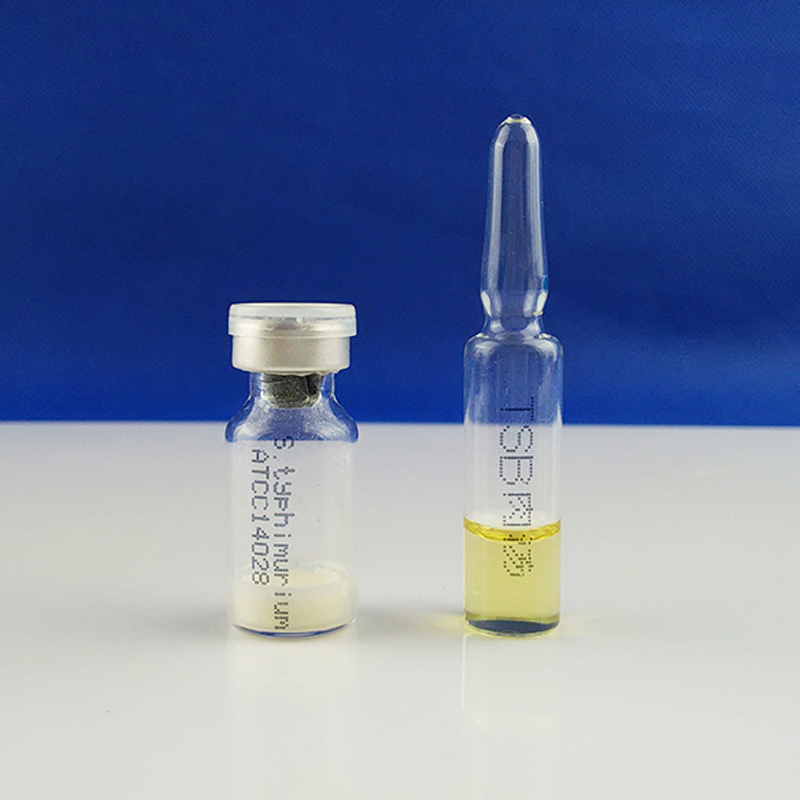
This product is a lyophilized (freeze-dried) reference culture of Shigella flexneri ATCC 12022, a well-characterized and widely used strain for microbiological quality control. It is intended for use as a positive control in growth promotion tests, culture media quality control, method validation, and other laboratory applications requiring a standardized, traceable Shigella reference.
The strain is preserved using vacuum freeze-drying technology, which ensures stable viability and long-term storage. Each vial is accompanied by a complete identification report, providing documented traceability of the strain’s characteristics. The vial is printed with the strain abbreviation and ATCC number for clear identification and to prevent mix-ups.
Intended Use
- Positive control reactions in microbiological testing.
- Growth promotion and selectivity testing of culture media.
- Quality control and method validation in food, pharmaceutical, and cosmetic laboratories.
- Educational and reference laboratory applications.
- For laboratory use only. Not for clinical diagnosis.
Product Features
- Stable Preservation: Vacuum freeze-drying technology ensures consistent strain quality and extended shelf life. Store at 2–8°C for 12 months, or at −80°C for 24 months or longer.
- Convenient Revival: Supplied with a dedicated strain revival solution and a detailed revival instruction manual for simple and convenient recovery.
- Full Traceability: Each product includes a complete strain identification report for safety and confidence.
- Clear Labeling: The vial is printed with the strain abbreviation and ATCC number to prevent confusion and ensure correct identification.
Strain Identification Method (Reference)
The following identification workflow is provided as a reference for quality control purposes:
- Revive the lyophilized strain and inoculate onto a TSA (Tryptic Soy Agar) plate.
- After activation, streak-inoculate onto XLD (Xylose Lysine Deoxycholate) agar and a Shigella chromogenic agar plate.
- Perform semi-solid motility stab, TSI (Triple Sugar Iron) tube streaking, and Gram staining with microscopic examination.
- Perform biochemical identification using a commercial Gram-negative bacterial identification system and a raffinose fermentation tube.
Storage and Shelf Life
- Format: Lyophilized culture in a sealed vial, with revival solution and instructions.
- Shelf Life: 3 years from date of manufacture (when stored under recommended conditions).
- Storage: Store at 2–8°C for up to 12 months, or at −80°C for 24 months or longer. Protect from moisture and light.
Q: What is this product used for?
A: This lyophilized Shigella flexneri ATCC 12022 strain is used as a positive control in microbiological testing, growth promotion tests, culture media quality control, and method validation in food, pharmaceutical, and cosmetic laboratories.
Q: How should I store the lyophilized strain?
A: Store the lyophilized strain at 2–8°C for up to 12 months, or at −80°C for 24 months or longer. Protect from moisture and light.
Q: What is included in the kit?
A: Each kit includes the lyophilized strain vial, a dedicated revival solution, and a detailed revival instruction manual. A complete strain identification report is also provided.
Q: How do I revive and identify the strain?
A: Revive the strain according to the instructions, inoculate onto TSA, then subculture onto XLD agar and Shigella chromogenic agar. Perform motility stab, TSI, Gram staining, biochemical testing, and raffinose fermentation as outlined in the identification method.
Q: Is this product intended for clinical use?
A: No. This product is intended for laboratory quality control and research use only. It is not intended for clinical diagnosis.
Q: What biosafety precautions should be taken?
A: Shigella flexneri is a Biosafety Level 2 (BSL-2) organism. Handle all materials according to your facility’s biosafety procedures, including appropriate personal protective equipment and waste disposal protocols.
Q: How should I dispose of the product after use?
A: Dispose of all materials as biohazardous waste according to your laboratory’s safety procedures. Autoclave before disposal to ensure sterilization
