
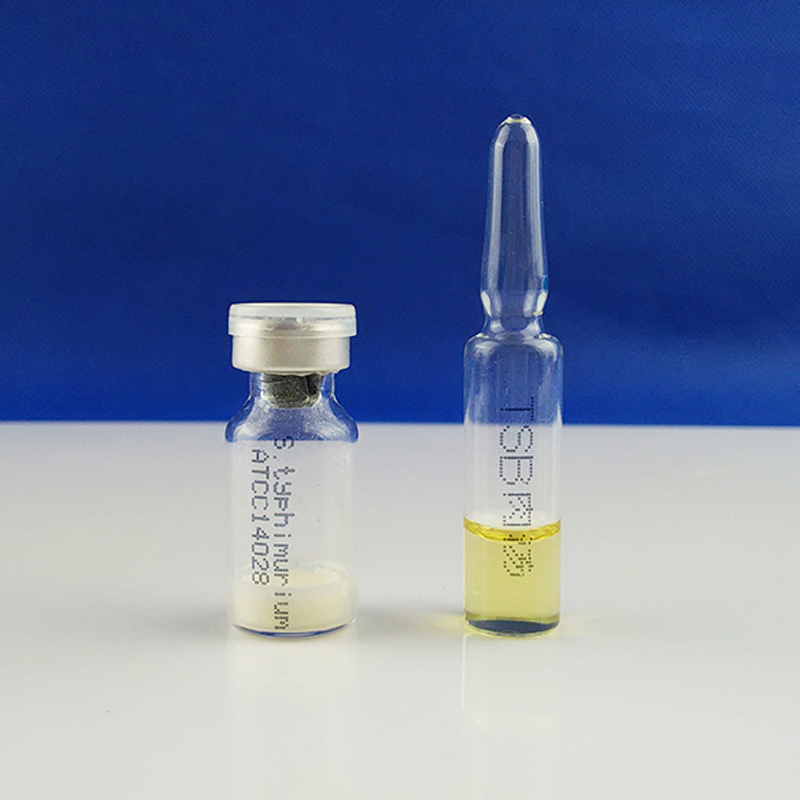
This product is a lyophilized (freeze-dried) reference culture of Salmonella typhimurium ATCC 14028, a well-characterized and widely used strain for microbiological quality control. It is intended for use as a positive control in growth promotion tests, culture media quality control, method validation, and other laboratory applications requiring a standardized, traceable Salmonella reference.
The strain is preserved using vacuum freeze-drying technology, which ensures stable viability and long-term storage. Each vial is accompanied by a complete identification report, providing documented traceability of the strain’s characteristics. The vial is printed with the strain abbreviation and ATCC number for clear identification and to prevent mix-ups.
Intended Use
- Positive control reactions in microbiological testing.
- Growth promotion and selectivity testing of culture media.
- Quality control and method validation in food, pharmaceutical, and cosmetic laboratories.
- Educational and reference laboratory applications.
- For laboratory use only. Not for clinical diagnosis.
Product Features
- Stable Preservation: Vacuum freeze-drying technology ensures consistent strain quality and extended shelf life. Store at 2–8°C for 12 months, or at −80°C for 24 months or longer.
- Convenient Revival: Supplied with a dedicated strain revival solution and a detailed revival instruction manual for simple and convenient recovery.
- Full Traceability: Each product includes a complete strain identification report for safety and confidence.
- Clear Labeling: The vial is printed with the strain abbreviation and ATCC number to prevent confusion and ensure correct identification.
Strain Identification Method (Reference)
The following identification workflow is provided as a reference for quality control purposes:
- Revive the lyophilized strain and inoculate onto a TSA (Tryptic Soy Agar) plate.
- After activation, inoculate onto an XLD (Xylose Lysine Deoxycholate) agar plate and into a TSI (Triple Sugar Iron) tube.
- Perform Gram staining and microscopic examination.
- Perform biochemical identification using a commercial Gram-negative bacterial identification system.
Storage and Shelf Life
- Format: Lyophilized culture in a sealed vial, with revival solution and instructions.
- Shelf Life: 3 years from date of manufacture (when stored under recommended conditions).
- Storage: Store at 2–8°C for up to 12 months, or at −80°C for 24 months or longer. Protect from moisture and light.
Q: What is this product used for?
A: This lyophilized Salmonella typhimurium ATCC 14028 strain is used as a positive control in microbiological testing, growth promotion tests, culture media quality control, and method validation in food, pharmaceutical, and cosmetic laboratories.
Q: How should I store the lyophilized strain?
A: Store the lyophilized strain at 2–8°C for up to 12 months, or at −80°C for 24 months or longer. Protect from moisture and light.
Q: What is included in the kit?
A: Each kit includes the lyophilized strain vial, a dedicated revival solution, and a detailed revival instruction manual. A complete strain identification report is also provided.
Q: How do I revive and identify the strain?
A: Revive the strain according to the instructions, inoculate onto TSA, then subculture onto XLD agar and TSI medium. Perform Gram staining and biochemical identification as outlined in the identification method.
Q: Is this product intended for clinical use?
A: No. This product is intended for laboratory quality control and research use only. It is not intended for clinical diagnosis.
Q: How should I dispose of the product after use?
A: Dispose of all materials as biohazardous waste according to your laboratory’s safety procedures. Autoclave before disposal to ensure sterilization.
